In today’s increasingly regulated and fast-paced world, legal documentation plays a critical role in protecting both businesses and individuals. Whether you are launching a startup, managing an established company, or handling personal affairs, having the right legal documents in place can prevent disputes, ensure compliance, and safeguard your assets.
This comprehensive guide provides a detailed legal documentation checklist for businesses and individuals. It covers essential documents, best practices, and practical insights to help you stay organized and legally secure.
Why Legal Documentation Matters
Legal documents serve as the backbone of any formal relationship—whether it’s business-related or personal. They define rights, responsibilities, and expectations while providing a framework for resolving disputes.
Key Benefits:
- Protection from legal risks
- Clarity in agreements and obligations
- Compliance with laws and regulations
- Evidence in case of disputes
- Improved business credibility
Failing to maintain proper documentation can lead to costly legal battles, financial losses, or even business shutdowns.
Part 1: Legal Documentation Checklist for Businesses
Businesses require a wide range of legal documents depending on their size, industry, and jurisdiction. Below is a structured checklist to ensure comprehensive coverage.
1. Business Formation Documents
These are the foundational documents that legally establish your business.
Essential Documents:
- Articles of Incorporation / Certificate of Formation
- Business Registration Certificate
- Operating Agreement (for LLCs)
- Memorandum and Articles of Association (for corporations)
- Partnership Agreement (for partnerships)
Why It Matters:
These documents define your business structure, ownership, and operational rules. Without them, your business may not be legally recognized.
2. Licenses and Permits
Operating without proper licenses can result in fines or forced closure.
Examples:
- Business License
- Industry-specific permits (health, construction, finance, etc.)
- Environmental permits
- Import/export licenses
Tip:
Always check local, regional, and national requirements to ensure full compliance.
3. Contracts and Agreements
Contracts are critical for defining relationships with clients, vendors, and partners.
Must-Have Contracts:
- Client Service Agreements
- Vendor/Supplier Agreements
- Non-Disclosure Agreements (NDAs)
- Employment Contracts
- Independent Contractor Agreements
- Partnership Agreements
Key Elements of a Strong Contract:
- Clear scope of work
- Payment terms
- Deadlines
- Termination clauses
- Dispute resolution methods
4. Employment and HR Documents
Proper HR documentation protects both the employer and employees.
Important Documents:
- Employee Handbook
- Offer Letters
- Employment Contracts
- Confidentiality Agreements
- Non-Compete Clauses (where enforceable)
- Performance Evaluation Records
- Termination Letters
Compliance Areas:
- Labor laws
- Workplace safety regulations
- Anti-discrimination policies
5. Financial and Tax Documents
Accurate financial documentation is essential for compliance and decision-making.
Key Documents:
- Tax Identification Number (TIN/EIN)
- Financial Statements (Balance Sheet, Income Statement)
- Tax Returns
- Payroll Records
- Invoices and Receipts
- Bank Statements
Best Practice:
Maintain organized records for at least 5–7 years, depending on legal requirements.
6. Intellectual Property (IP) Documents
Protecting your intellectual property is crucial in a competitive market.
Types of IP Documents:
- Trademarks
- Copyright Registrations
- Patents
- Trade Secret Agreements
- Licensing Agreements
Why It Matters:
Without IP protection, your ideas and brand can be copied without legal recourse.
7. Insurance Documents
Insurance provides financial protection against unforeseen events.
Common Business Insurance:
- General Liability Insurance
- Professional Liability Insurance
- Property Insurance
- Workers’ Compensation Insurance
Keep Records Of:
- Policy agreements
- Coverage details
- Claim history
8. Compliance and Regulatory Documents
Businesses must comply with various regulations depending on their industry.
Examples:
- Data protection policies (e.g., privacy policies)
- Terms and Conditions (for websites/apps)
- Health and safety compliance records
- Audit reports
Tip:
Regularly review compliance documents to reflect changes in laws.
9. Corporate Governance Documents
These documents define how your business is managed.
Key Documents:
- Board meeting minutes
- Shareholder agreements
- Corporate bylaws
- Annual reports
Importance:
They ensure transparency and accountability within the organization.
10. Exit and Succession Planning Documents
Planning for the future is essential for business continuity.
Important Documents:
- Buy-Sell Agreements
- Succession Plans
- Business Valuation Reports
- Dissolution Agreements
Part 2: Legal Documentation Checklist for Individuals
Legal documentation is equally important for personal matters. It ensures your wishes are respected and your assets are protected.
1. Personal Identification Documents
These are fundamental for legal and administrative purposes.
Examples:
- Passport
- National ID Card
- Driver’s License
- Birth Certificate
Tip:
Keep both physical and digital copies सुरक्षित and accessible.
2. Financial Documents
Managing personal finances requires proper documentation.
Key Documents:
- Bank Account Statements
- Investment Records
- Loan Agreements
- Credit Card Statements
- Tax Returns
Why It Matters:
These documents are essential for financial planning and tax compliance.
3. Property and Asset Documents
Ownership documents are critical for proving legal rights.
Examples:
- Property Deeds
- Lease Agreements
- Vehicle Ownership Documents
- Mortgage Agreements
4. Insurance Policies
Insurance protects individuals from financial hardship.
Common Policies:
- Health Insurance
- Life Insurance
- Auto Insurance
- Home Insurance
Keep Track Of:
- Policy details
- Beneficiaries
- Renewal dates
5. Estate Planning Documents
Estate planning ensures your assets are distributed according to your wishes.
Essential Documents:
- Last Will and Testament
- Living Will
- Trust Documents
- Power of Attorney
Benefits:
- Avoids family disputes
- Reduces legal complications
- Ensures smooth asset transfer
6. Medical and Health Documents
These documents are vital in emergencies.
Examples:
- Medical Records
- Health Insurance Cards
- Advance Healthcare Directives
7. Legal Agreements
Individuals may enter into various legal agreements.
Examples:
- Rental Agreements
- Prenuptial Agreements
- Settlement Agreements
- Personal Loan Agreements
8. Digital Asset Documentation
In the digital age, managing online assets is increasingly important.
Include:
- Password management plans
- Digital wills
- Online account details
Tip:
Use secure password managers instead of writing passwords in plain text.
Best Practices for Managing Legal Documents
Having the right documents is only part of the equation. Proper management is equally important.
1. Organize Documents Systematically
- Use categories (business, personal, financial, legal)
- Maintain both physical and digital copies
- Use cloud storage for backup
2. Keep Documents Updated
Outdated documents can be as risky as having none.
- Review annually
- Update after major life or business changes
- Ensure compliance with current laws
3. Ensure Secure Storage
Security is critical for sensitive documents.
- Use encrypted digital storage
- Store physical documents in safes
- Limit access to authorized individuals only
4. Work with Legal Professionals
Consulting a lawyer ensures your documents are legally sound.
- Draft contracts professionally
- Review important agreements
- Stay updated on legal requirements
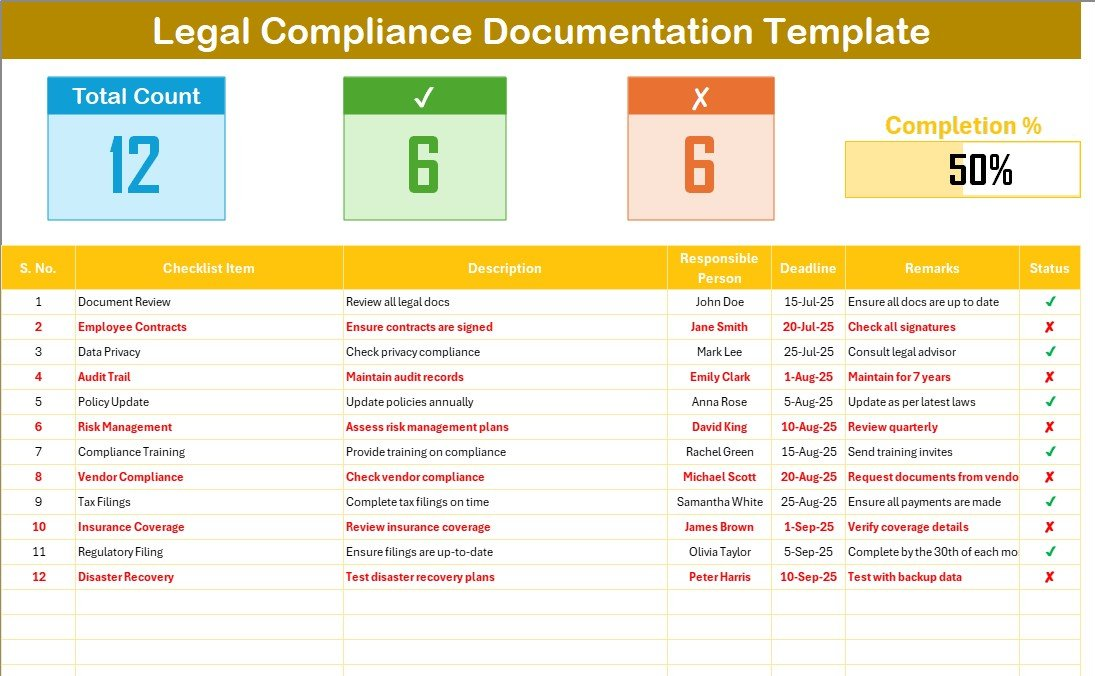
5. Maintain a Document Checklist
Create a personalized checklist based on your needs.
Example:
- Business: Contracts, licenses, tax records
- Personal: Will, insurance, property documents
Common Mistakes to Avoid
Even experienced individuals and businesses make mistakes when handling legal documents.
1. Ignoring Legal Requirements
Failing to comply with regulations can result in penalties.
2. Using Generic Templates Without Review
Templates may not suit your specific situation.
3. Not Backing Up Documents
Loss of documents can cause serious issues.
4. Delaying Documentation
Procrastination can lead to missed opportunities or legal risks.
5. Poor Record Keeping
Disorganized records make it difficult to retrieve important information.
How Technology is Changing Legal Documentation
Modern technology has transformed how legal documents are created, stored, and managed.
1. Digital Signatures
- Faster contract execution
- Legally recognized in many jurisdictions
2. Cloud Storage Solutions
- Easy access from anywhere
- Secure backup options
3. Document Automation Tools
- Reduce manual work
- Improve accuracy
4. AI-Powered Legal Tools
- Contract analysis
- Risk detection
- Compliance monitoring
Final Thoughts
Legal documentation is not just a formality—it is a powerful tool that protects your interests, ensures compliance, and provides peace of mind. Whether you are running a business or managing personal affairs, having a well-organized and comprehensive set of legal documents is essential.
By following this legal documentation checklist for businesses and individuals, you can minimize risks, improve efficiency, and prepare for both opportunities and challenges ahead.