In today’s fast-paced digital economy, businesses are under constant pressure to innovate, scale, and remain competitive. One of the most transformative forces enabling this evolution is cloud computing. At the same time, Enterprise Software-as-a-Service (SaaS) applications have become the backbone of modern organizations, delivering mission-critical functionality through the internet.
But what truly powers the efficiency, flexibility, and scalability of enterprise SaaS solutions? The answer lies in cloud computing. Without it, SaaS as we know it today would not exist in its current form.
This article explores how cloud computing powers enterprise SaaS applications, the underlying technologies involved, and why this combination has revolutionized how businesses operate globally.
What Is Cloud Computing?
Cloud computing refers to the delivery of computing services—including servers, storage, databases, networking, software, analytics, and intelligence—over the internet (“the cloud”). Instead of owning and maintaining physical data centers, organizations can access technology services on-demand.
Key Characteristics of Cloud Computing
- On-demand self-service: Users can provision resources without human interaction.
- Broad network access: Services are accessible from anywhere with internet connectivity.
- Resource pooling: Providers serve multiple customers using shared infrastructure.
- Rapid elasticity: Resources can scale up or down instantly.
- Measured service: Pay-as-you-go pricing model.
Understanding Enterprise SaaS Applications
Enterprise SaaS applications are software solutions delivered over the cloud and designed to meet the needs of large organizations. These applications typically support functions such as:
- Customer Relationship Management (CRM)
- Enterprise Resource Planning (ERP)
- Human Resource Management (HRM)
- Collaboration and communication tools
- Data analytics and business intelligence
Key Benefits of SaaS
- No installation or maintenance required
- Automatic updates
- Accessibility from any device
- Cost efficiency
- Scalability
The Relationship Between Cloud Computing and SaaS
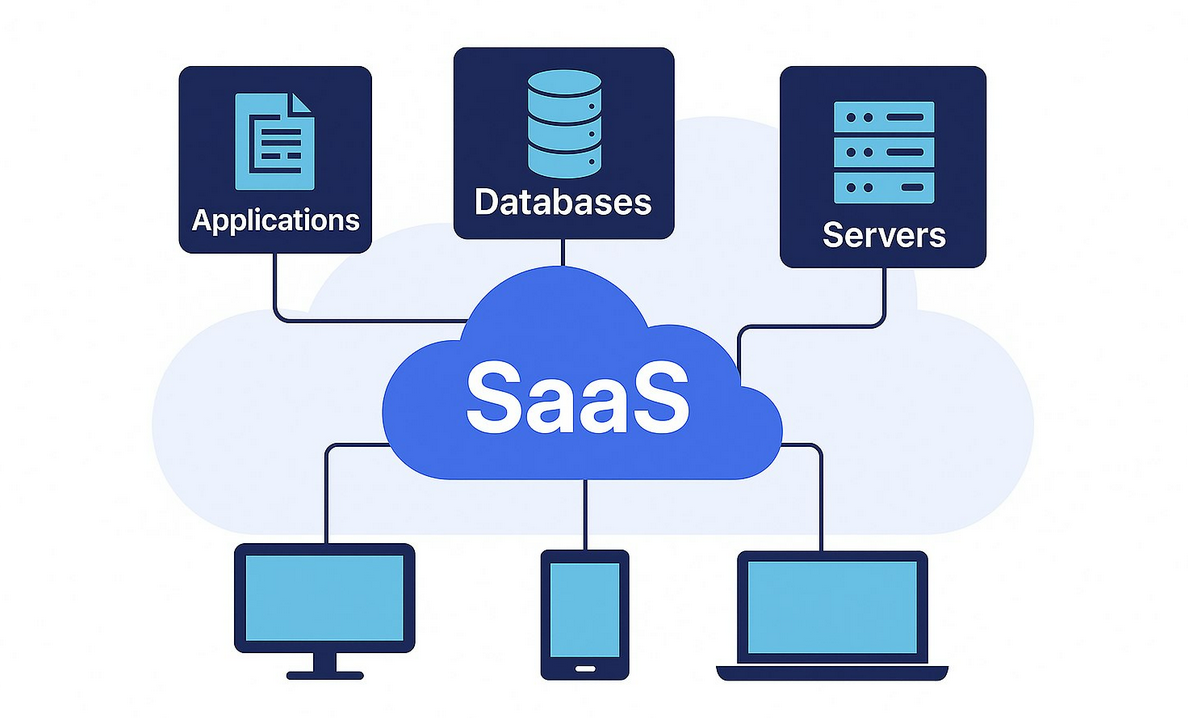
Cloud computing is the foundation upon which SaaS applications are built. SaaS is essentially a cloud-based service model that delivers software over the internet. Without cloud infrastructure, SaaS applications would lack the flexibility, scalability, and accessibility that define them.
Cloud Service Models
Cloud computing is generally divided into three service models:
- Infrastructure as a Service (IaaS)
Provides virtualized computing resources such as servers and storage. - Platform as a Service (PaaS)
Offers a platform for developers to build, test, and deploy applications. - Software as a Service (SaaS)
Delivers software applications over the internet.
Enterprise SaaS applications rely heavily on IaaS and PaaS layers to function efficiently.
How Cloud Computing Powers Enterprise SaaS Applications
1. Scalable Infrastructure
One of the most critical advantages of cloud computing is scalability. Enterprise SaaS applications often serve thousands or even millions of users simultaneously. Cloud infrastructure allows these applications to scale dynamically based on demand.
- Auto-scaling ensures performance during traffic spikes
- Elastic resources prevent over-provisioning
- Global distribution supports users worldwide
This scalability ensures consistent performance regardless of workload fluctuations.
2. High Availability and Reliability
Enterprise applications must be available 24/7. Downtime can lead to significant financial losses and damage to reputation.
Cloud computing ensures high availability through:
- Redundant data centers
- Load balancing across multiple servers
- Failover mechanisms
These features ensure that SaaS applications remain operational even in the event of hardware failures or network issues.
3. Cost Efficiency
Traditional IT infrastructure requires substantial capital investment. Businesses must purchase hardware, maintain servers, and manage data centers.
Cloud computing eliminates these costs by offering:
- Pay-as-you-go pricing
- Reduced maintenance expenses
- No upfront infrastructure investment
For enterprise SaaS providers, this cost model enables them to offer competitive pricing to customers while maintaining profitability.
4. Rapid Deployment and Time-to-Market
Cloud environments allow developers to deploy applications quickly and efficiently. This is crucial for enterprise SaaS companies that need to release updates and new features regularly.
Benefits include:
- Continuous integration and continuous deployment (CI/CD)
- Automated testing environments
- Faster development cycles
As a result, businesses can innovate faster and stay ahead of competitors.
5. Data Storage and Management
Enterprise SaaS applications handle vast amounts of data. Cloud computing provides scalable and secure storage solutions.
Features include:
- Distributed databases
- Data replication across regions
- Backup and disaster recovery
These capabilities ensure that data is always accessible, secure, and protected against loss.
6. Security and Compliance
Security is a top concern for enterprises. Cloud providers invest heavily in advanced security measures to protect data and applications.
Key security features include:
- Encryption (data at rest and in transit)
- Identity and access management (IAM)
- Threat detection and monitoring
- Compliance with industry standards (e.g., GDPR, HIPAA)
Enterprise SaaS providers leverage these features to ensure their applications meet strict security requirements.
7. Global Accessibility
Cloud computing enables SaaS applications to be accessed from anywhere in the world.
- Employees can work remotely
- Teams can collaborate across time zones
- Customers can access services 24/7
This global accessibility is essential for modern enterprises with distributed workforces.
8. Performance Optimization
Cloud providers offer tools and services that optimize application performance.
Examples include:
- Content Delivery Networks (CDNs)
- Edge computing
- Caching mechanisms
These technologies reduce latency and ensure fast response times for users.
9. Integration and Interoperability
Enterprise SaaS applications often need to integrate with other systems and services.
Cloud platforms provide APIs and integration tools that allow:
- Seamless data exchange
- Workflow automation
- Third-party service integration
This interoperability enhances the functionality and value of SaaS applications.
10. Artificial Intelligence and Analytics
Cloud computing enables SaaS applications to leverage advanced technologies such as:
- Machine learning
- Big data analytics
- Predictive modeling
These capabilities allow enterprises to gain valuable insights and make data-driven decisions.
Real-World Use Cases
1. Customer Relationship Management (CRM)
Cloud-powered CRM systems allow businesses to:
- Track customer interactions
- Manage sales pipelines
- Analyze customer behavior
These systems scale effortlessly as the customer base grows.
2. Enterprise Resource Planning (ERP)
Cloud-based ERP solutions integrate various business processes into a single system, including:
- Finance
- Supply chain
- Inventory management
Cloud infrastructure ensures real-time data access and system reliability.
3. Collaboration Tools
Modern collaboration platforms rely on cloud computing to provide:
- Real-time communication
- File sharing
- Video conferencing
These tools enable remote teams to work efficiently.
Challenges of Cloud-Powered SaaS Applications
While cloud computing offers numerous benefits, it also presents challenges:
1. Data Privacy Concerns
Storing data in the cloud raises concerns about:
- Unauthorized access
- Data breaches
- Regulatory compliance
2. Vendor Lock-In
Switching cloud providers can be complex and costly.
3. Downtime Risks
Although rare, cloud outages can impact multiple services simultaneously.
4. Performance Variability
Performance may vary depending on network conditions and server load.
Future Trends in Cloud and SaaS
1. Multi-Cloud Strategies
Organizations are increasingly using multiple cloud providers to:
- Reduce risk
- Improve reliability
- Avoid vendor lock-in
2. Serverless Computing
Serverless architecture allows developers to focus on code without managing infrastructure.
3. Edge Computing
Processing data closer to users reduces latency and improves performance.
4. AI-Driven SaaS
Artificial intelligence will play a larger role in automating processes and enhancing user experiences.
Best Practices for Building Cloud-Powered SaaS Applications
To maximize the benefits of cloud computing, SaaS providers should follow best practices:
1. Design for Scalability
Build applications that can handle growth without performance degradation.
2. Implement Strong Security Measures
Use encryption, authentication, and monitoring tools to protect data.
3. Optimize Performance
Leverage CDNs, caching, and load balancing.
4. Monitor and Analyze
Use analytics tools to track performance and user behavior.
5. Ensure Compliance
Adhere to industry regulations and standards.
Conclusion
Cloud computing is the driving force behind the success of enterprise SaaS applications. It provides the infrastructure, scalability, security, and flexibility needed to deliver powerful software solutions to businesses around the world.
By leveraging cloud technologies, organizations can:
- Reduce costs
- Improve efficiency
- Accelerate innovation
- Scale operations effortlessly
As technology continues to evolve, the relationship between cloud computing and SaaS will only grow stronger. Businesses that embrace this synergy will be better positioned to thrive in the digital age.
Final Thoughts
The combination of cloud computing and enterprise SaaS is not just a trend—it is the foundation of modern business technology. Whether you are a startup or a large enterprise, understanding how cloud computing powers SaaS applications is essential for staying competitive in today’s market.